
The Supreme Court has sought a response from the Centre regarding the introduction of totalisers for counting votes recorded in Electronic Voting Machines (EVMs). The court wants to understand any impediments and potential negative impacts of this mechanism, which aims to protect voter privacy and prevent post-poll violence by counting votes from multiple booths together.
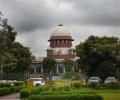
Supreme Court Justice V Mohana recused herself from a 2016 Public Interest Litigation (PIL) seeking directions for the speedy disposal of criminal cases against lawmakers. This development follows a report by amicus curiae Vijay Hansaria, which revealed over 4,000 pending criminal cases against Members of Parliament (MPs) and Members of Legislative Assemblies (MLAs), including chief ministers from 14 states. The Supreme Court has previously issued directives to high courts to establish special benches to monitor and fast-track these trials.
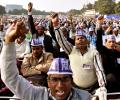
The Centre has informed the Supreme Court that the 'creamy layer' principle, which excludes affluent individuals from reservation benefits, does not apply to Scheduled Castes (SCs) and Scheduled Tribes (STs). This stance opposes Public Interest Litigations (PILs) seeking to implement such a principle for SC/ST reservations and to direct the government to formulate policies for more equitable distribution of reservation benefits.
The Supreme Court has sought responses from the Centre and state governments on a Public Interest Litigation (PIL) advocating for the confiscation of movable and immovable property belonging to individuals and their family members involved in exam question paper leak cases. The plea also calls for invoking various anti-corruption and financial crime acts against perpetrators and suggests consecutive sentencing for such offences.
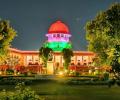
The Supreme Court has agreed to list for final hearing the pleas challenging the validity of certain provisions of the Places of Worship (Special Provisions) Act, 1991.

The Supreme Court has sought responses from the Centre and States regarding a plea alleging the misuse of Aadhaar cards as proof of citizenship, domicile, and residential address. The petition argues that despite legal provisions, Aadhaar is being used for purposes beyond identity verification, potentially aiding illegal immigrants, and calls for a comprehensive overhaul of electoral verification processes.
The Supreme Court has stated that roads cannot be blocked for religious activities and that while religious denominations have autonomy in worship, the government can interfere if secular activities are affected.
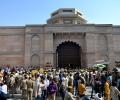
The Supreme Court of India is scheduled to hear a batch of petitions challenging the validity of certain provisions of the Places of Worship (Special Provisions) Act, 1991, which prohibits lawsuits to reclaim a place of worship or change its character from what prevailed on August 15, 1947. The pleas, including one filed by Ashwini Upadhyay, argue that these provisions violate the right to judicial remedy and create an arbitrary cut-off date. The matter will be heard in the backdrop of several ongoing cases related to places of worship, including the Gyanvapi Mosque in Varanasi and the Shahi Idgah Mosque in Mathura. The Muslim side has cited the 1991 law to argue that such suits are not maintainable. The Supreme Court had previously sought the Centre's response to Upadhyay's petition, which alleged that the law creates an "arbitrary and irrational retrospective cut-off date" for maintaining the character of places of worship.
The Supreme Court of India has sought responses from the Centre and others on a petition challenging the constitutional validity of certain provisions of the Waqf Act, 1995. The petition argues that the Act gives undue favor to waqf properties and deprives non-Muslims of their property rights. The court has tagged the petition with pending petitions that raise similar issues.
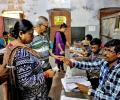
A plea has been filed in the Supreme Court seeking Special Intensive Revision (SIR) of electoral rolls, particularly before parliamentary, state assembly and local body elections. The court has agreed to hear a batch of petitions challenging the Election Commission's decision to undertake special intensive revision of electoral rolls in Bihar.
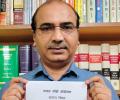
A Delhi court on Wednesday granted bail to former Bharatiya Janata Party spokesperson Ashwini Upadhyay, arrested in connection with the communal slogans allegedly raised during a protest at the Jantar Mantar in New Delhi.
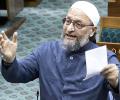
The Supreme Court on Thursday agreed to consider a plea of All India Majlis-e-Ittehadul Muslimeen (AIMIM) chief Asaduddin Owaisi seeking the implementation of the 1991 places of worship law, which asks to maintain the religious character of a place as it existed on August 15, 1947.

The Supreme Court on Monday refused to entertain a plea seeking a uniform minimum age of 21 years for marriage for both men and women, saying that it will amount to directing Parliament to make a law to fix the age.
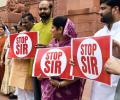
The Supreme Court has warned that it will set aside the special intensive revision (SIR) of electoral rolls in Bihar if any illegality is found. The court is reviewing the validity of the Bihar SIR and its potential impact on a similar exercise across India.
A video showing anti-Muslim slogans being raised during a protest at Jantar Mantar here was widely circulated on social media, following which the Delhi Police registered a case in connection with the matter on Monday.
In a significant development, the Supreme Court on Tuesday asked the Election Commission of India to provide details of cases in which it had either removed or reduced the period of disqualification from electoral rolls of leaders post their conviction in criminal cases.

The petition filed by advocate Srinivasan has also sought a direction to poll panel to take effective steps to restrain political parties from making promises of freebies during the pre-election period.
The Mathura Shahi Masjid Eidgah Committee has approached the Supreme Court, requesting the court to prevent the central government from filing a response to a petition challenging the Places of Worship Act's constitutional validity. The committee accuses the BJP-led government of intentionally delaying its response. The court had previously issued a notice to the government in March 2021, but the government has yet to submit its reply despite numerous opportunities. The committee argues that the government's delay is intended to obstruct those opposing the challenge to the Places of Worship Act from filing their own responses. The petition also states that the pleas challenging the law's validity are scheduled for hearing on February 17, and closing the government's right to respond would serve justice. The Supreme Court previously issued a ruling in December 2022 that stopped courts from entertaining new lawsuits or issuing interim or final orders regarding the reclaiming of religious places, particularly mosques and dargahs. The ruling halted proceedings in 18 lawsuits filed by Hindu groups seeking surveys to confirm the original religious character of 10 mosques, including the Gyanvapi Masjid in Varanasi, the Shahi Idgah Masjid in Mathura, and the Shahi Jama Masjid in Sambhal. This decision was made in response to six petitions, including one filed by lawyer Ashwini Upadhyay, challenging various provisions of the Places of Worship Act. The 1991 law prohibits the conversion of places of worship and guarantees the preservation of their existing religious character as it stood on August 15, 1947. Notably, the dispute regarding the Ram Janmabhoomi-Babri Masjid in Ayodhya was excluded from this law. There are also several cross-petitions advocating for a strict enforcement of the 1991 law to uphold communal harmony and maintain the current status of mosques that Hindu groups seek to reclaim, claiming they were temples before being destroyed by invaders.
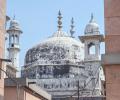
The AIMPLB contended that the object of the Act is to prevent disturbances of public order, maintain peace and tranquility, and strengthen the basic feature of secularism.
The Act prohibits conversion of any place of worship and provides for the maintenance of the religious character of any place of worship as it existed on August 15, 1947.

The Supreme Court has directed the Election Commission to provide details regarding the 3.66 lakh voters excluded from Bihar's final electoral roll after a Special Intensive Revision (SIR) exercise. The court's direction came after concerns were raised by petitioners about the lack of notice or reasons given to the excluded voters.

The Supreme Court of India expressed concern about the "criminalization of politics" and questioned how convicted individuals can return to Parliament. The court sought the assistance of the attorney general on this issue, highlighting the apparent conflict of interest and the need for clarity on the Representation of People Act's provisions. The court also raised concerns about the slow pace of trials against lawmakers, with a significant number of cases pending. The issue has been referred to a larger bench for consideration.
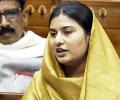
Samajwadi Party leader and Kairana MP Iqra Choudhary has moved the Supreme Court seeking effective implementation of the Places of Worship (Special Provisions) Act, 1991. This move comes amidst several petitions challenging the law's validity, including those filed by the Akhil Bhartiya Sant Samiti and lawyer Ashwini Upadhyay. The Supreme Court, in December 2022, had restrained all courts from examining fresh suits and passing interim orders in pending cases seeking to reclaim religious places. The Act aims to maintain the religious character of places of worship as they existed on August 15, 1947, but the dispute relating to Ram Janmabhoomi-Babri Masjid at Ayodhya was kept out of its purview. The court has listed Choudhary's plea with other pending pleas for February 17.

A bench comprising Chief Justice Uday Umesh Lalit and Justice Bela M Trivedi said a representation may be made by petitioner Ashwini Upadhyay to the poll panel or other authorities for consideration.
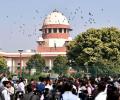
A bench comprising Chief Justice Sanjiv Khanna and Justice Sanjay Kumar also indicated that it may not take up the pending scheduled petitions, heard earlier by a three-judge bench, during the day as it was sitting in a combination of two judges.

The Supreme Court on Wednesday agreed to consider the PIL which has sought a lifetime disqualification of an elected representative following conviction in a criminal case.
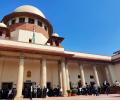
A bench of justices KM Joseph and BV Nagarathna deferred the matter after lawyer Ashwini Upadhyay mentioned it saying it be heard on April 5 or 6 as it was unlikely to be heard during the day.
The Supreme Court said on Thursday that it will set up a fresh five-judge Constitution bench at an "appropriate stage" to hear pleas challenging the constitutional validity of polygamy and 'nikah halala' among Muslims.
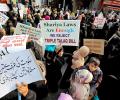
The Supreme Court on Friday said that it will set up a five-judge Constitution bench to hear pleas challenging the constitutional validity of polygamy and 'nikaah halala' practice among Muslims.
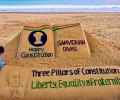
A bench comprising Justices Sanjiv Khanna and Sanjay Kumar passed the remark while hearing a batch of petitions filed by former Rajya Sabha MP Subramanian Swamy, advocate Vishnu Shankar Jain and others, who have challenged the inclusion of words "socialist" and "secular" in the Preamble of the Constitution.
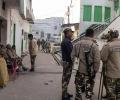
A four-member team from the Archaeological Survey of India (ASI) conducted a survey of the recently-discovered Shri Kartik Mahadev temple, five pilgrimage sites, and 19 wells in Sambhal, Uttar Pradesh, India. The survey followed the discovery of three damaged idols inside a well of the Bhasma Shankar temple, which was reopened after being shut for 46 years. The Shri Kartik Mahadev temple, also known as the Bhasma Shankar temple, was reopened on December 13 after authorities found the covered structure during an anti-encroachment drive. The temple houses an idol of Lord Hanuman and a Shivling and had remained locked since 1978. The district administration has requested carbon dating of the temple, including the well, from the ASI. Meanwhile, the Supreme Court has restrained courts across India from entertaining new lawsuits or passing any orders in pending ones seeking to reclaim religious places, especially mosques and dargahs, until further notice. This action halts proceedings in approximately 18 lawsuits filed by Hindu parties seeking surveys to determine the original religious character of 10 mosques, including the Gyanvapi at Varanasi, the Shahi Idgah Masjid at Mathura, and the Shahi Jama Masjid at Sambhal, where four individuals died in clashes. The Supreme Court will examine the legality, scope, and boundaries of the Places of Worship (Special Provisions) Act, 1991, which prohibits the conversion of places of worship and ensures the preservation of their religious character as it existed on August 15, 1947.
The Supreme Court on Friday observed the 1976 amendment to the Constitution adding terms 'socialist', 'secular' and 'integrity' to the Preamble underwent judicial reviews and it cannot say whatever Parliament did during the emergency period was all nullity.
The Supreme Court is scheduled to hear on March 18 a plea seeking to debar from polls, candidates charged with serious offences. The plea, filed by advocate Ashwini Kumar Upadhyay, seeks directions to the Centre and the Election Commission of India (ECI) to restrain such candidates put on trial for serious offences. The plea alleges that despite recommendations of the Law Commission of India and court's previous directions, the Centre and the ECI did not act. The plea also highlights the increasing number of MPs with declared serious criminal cases since 2009, with one MP declaring 204 criminal cases against him, including culpable homicide, house trespass, robbery, criminal intimidation, etc. It claims that political parties are competing with each other in a race to the bottom as they couldn't afford to leave their competitors free to recruit persons with criminal antecedents.
Commencing hearing on pleas challenging the constitutionality of the Places of Worship Act, 1991, the Supreme Court asked the Centre to reply to cross-pleas against or seeking implementation of statute.
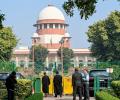
The PIL also seeks a direction to the Election Commission to invoke its powers to freeze the election symbols and cancel the registration of such political parties.

The 1991 provision is an Act to prohibit conversion of any place of worship and to provide for the maintenance of the religious character of any place of worship as it existed on August 15, 1947, and for matters connected therewith or incidental thereto.

The Supreme Court on Tuesday granted time till October 31 to the Centre to file its response to a batch of pleas challenging certain provisions of a 1991 law that prohibits filing of a lawsuit to reclaim a place of worship or seek a change in its character from what prevailed on August 15, 1947.

The fresh plea, filed through lawyer Ashwani Dubey, seeks dismissal of the pending PILs of various petitioners including the Indian Union Muslim League on various grounds.

The Delhi high court on Monday asked the Centre to file reply on a plea seeking linking of immovable and movable property documents of citizens with their Aadhaar numbers to curb corruption, black money generation, and benami transactions.
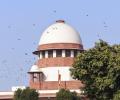
The Supreme Court on Monday said that it will hear on March 17 pleas dealing with two separate issues of alleged 'fraudulent conversions' and challenge to various state laws on religious conversions due to interfaith marriages respectively.
